Few countries reward travellers like Jordan does. In a single week you can walk through a 2,000-year-old rock-cut city, float in the saltiest sea on Earth, sleep beneath the stars in the desert that doubled as Mars on screen, hike a canyon dropping below sea level, and stand on the mountain where the Prophet Moses overlooked the Holy Land. This guide walks you through the country's best experiences.
1. Explore the Ancient City of Petra
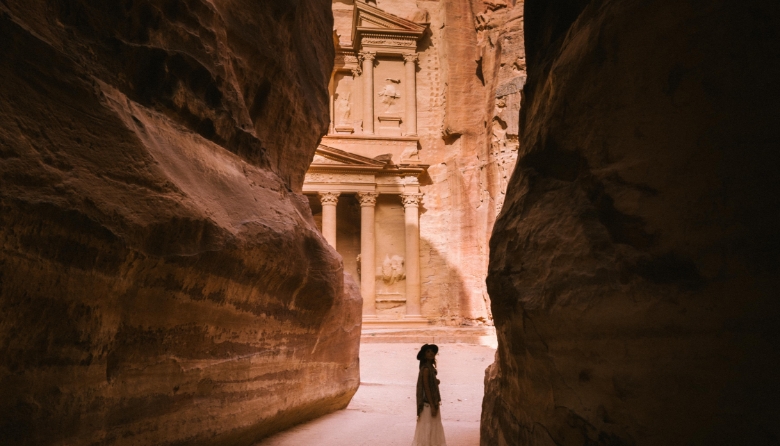
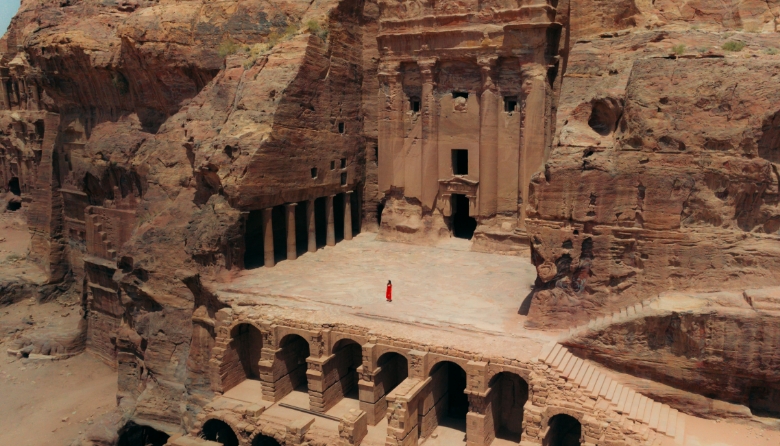
The rock-cut Nabataean capital was inscribed as a UNESCO World Heritage Site in 1985 and remains the most-visited destination in Jordan. The walk through the Siq, a narrow sandstone gorge that suddenly opens to reveal the Treasury, is travel's most dramatic arrival.
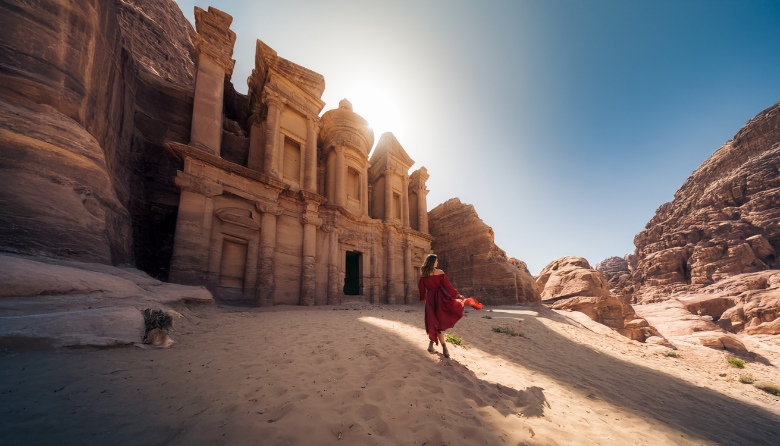
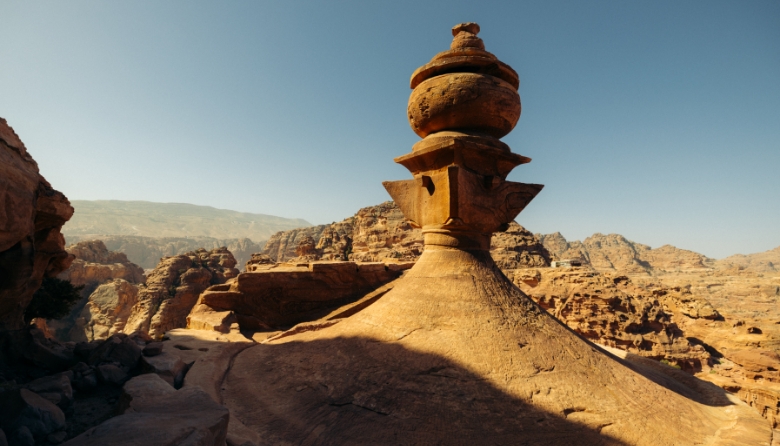
Plan at least a full day, ideally two, to see beyond the Treasury. The longer trails lead to the Monastery (Ad-Deir), the High Place of Sacrifice, and Al-Khubtha viewpoint overlooking the Treasury from above. Evenings open up further options: Petra by Night runs the Siq under candlelight Sunday through Thursday from 8:30 PM to 10:30 PM.
For full route options, costs, and logistics, see our guides on the distance between Amman and Petra, how to get to Petra, and how much it costs to visit. The main destination page is Petra on Visit Jordan.
2. Camp Under the Stars in Wadi Rum
South of Petra, the desert landscape of Wadi Rum has been called the Valley of the Moon for centuries. The protected area is inscribed as a UNESCO World Heritage Site, recognised for both its natural and cultural significance.
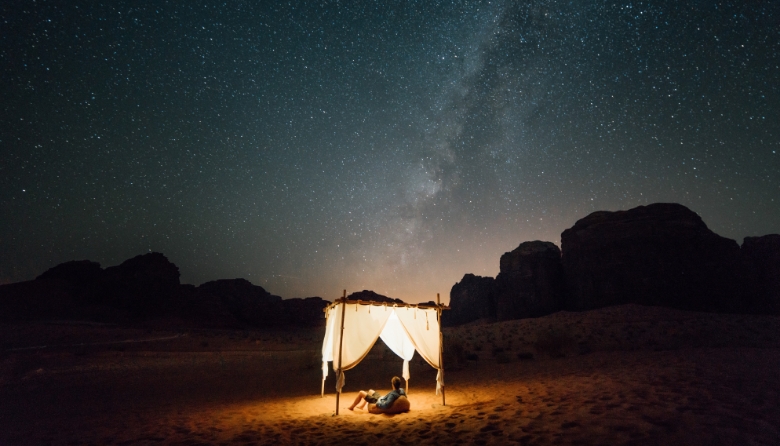
This is where T.E. Lawrence (Lawrence of Arabia) based himself during the Arab Revolt of 1917-1918. Today the area is managed in partnership with the local Bedouin community, whose camps offer the most authentic way to experience Wadi Rum: a jeep tour through the valleys by day, dinner cooked underground in a zarb, and a night under one of the clearest skies in the region.
Most visitors combine Wadi Rum with Petra, since the drive between the two takes only 1.5 to 2 hours.
3. Float in the Dead Sea
The Dead Sea is the lowest land elevation on Earth. Its shores currently sit around 440 metres below sea level, and the water itself contains about 34 percent salt, roughly ten times the salinity of the ocean. The result is the experience the Dead Sea is famous for: water so dense you cannot sink. Reading a newspaper while reclining on the surface is genuinely possible.
The mineral-rich black mud along the shoreline has been used for skin treatments for thousands of years, and the Dead Sea was one of the world's first health resorts. Resorts range from family-friendly day-pass beaches to international five-star properties with private mineral pools and spas.
Practical notes: rinse off immediately after floating (the salt stings), don't get the water in your eyes, and limit your time in the water to 15-20 minutes per session. The Dead Sea is about an hour from Amman, making it an easy day trip or a luxurious overnight before heading south.
4. Walk Through the Roman Ruins of Jerash
Located in the north of Jordan, Jerash is one of the best-preserved Roman provincial towns in the world. A short drive from Amman takes you to a city dating back to Neolithic times that flourished under Roman rule. Walk the colonnaded streets, public squares and plazas, temples, and theatres that anchored civic life through the Roman and Byzantine eras, with architectural details reflecting the layered influence of the empires that ruled here.
The city was initially known as Gerasa during the early Greek period, then renamed Antioch on the Gold River after Antiochus IV, the Seleucid king. The original name was reinstated following Emperor Hadrian's visit in 129 AD. After the Islamic conquest of 636, Jerash prospered under the Umayyads before being abandoned following the devastating earthquake of 749. Life began to return in the 12th century, and the modern town took shape in the 19th.
Jerash is an easy day trip from Amman and pairs well with Ajloun Castle.
5. Discover Amman's Ancient and Modern Sides
Most visitors treat Amman as a launch pad for the south, but Jordan's capital is worth at least a day in its own right. The Amman Citadel sits on the highest hill in the city, with ruins spanning the Roman, Byzantine, and Umayyad periods, including the Temple of Hercules and the Umayyad Palace. The Roman Theatre carved into the hillside below the Citadel is one of the largest in the region and still hosts concerts and cultural events.
For modern Amman, head to The Boulevard in Abdali, where sleek dining, upscale retail, and contemporary architecture define the city's newer face. The historic Jabal Amman district, with its boutique cafés, art galleries, and Friday markets fill restored 1920s buildings, offers a charming contrast. The Jordan Museum in downtown Amman houses some of the country's most important archaeological treasures, including the Dead Sea Scrolls and the 9,000-year-old Ain Ghazal statues, among the oldest known large-scale human statues in the world.
Amman's food scene punches well above its weight, from fluffy falafel and knafeh in downtown bakeries to fine-dining restaurants in Abdoun and Sweifieh. For a deeper exploration, see Amman on Visit Jordan and our guide to things to do in downtown Amman.
6. Dive the Coral Reefs of Aqaba
Jordan's coastline stretches along the Gulf of Aqaba at the northern tip of the Red Sea, and its marine biodiversity more than compensates for its size. The Aqaba Marine Reserve, declared in 2019, protects a stretch of reef south of the city that is home to roughly 500 fish species and an extraordinary density of hard and soft coral. Red Sea reefs are also known for their unusual resilience to climate change, which has made them a focus of international marine research.
Popular dive sites include the Cedar Pride, a Lebanese freighter intentionally sunk in 1985 to create an artificial reef, and an underwater military museum featuring a tank, an aircraft, and other decommissioned hardware. For non-divers, snorkelling and glass-bottom boat trips offer easy access to the same reefs.
Aqaba doubles as the gateway to southern Jordan: King Hussein International Airport here is the closest airport to Petra and Wadi Rum, and cruise ships dock at the port.
7. Hike the Wadi Mujib Canyon
Often called the Grand Canyon of Jordan, Wadi Mujib is the centrepiece of the Mujib Biosphere Reserve. At 212 square kilometres, it is the lowest nature reserve in the world, dropping to roughly 410 metres below sea level where the wadi meets the Dead Sea. The reserve was established in 1987 by the Royal Society for the Conservation of Nature (RSCN) and protects everything from Nubian ibex to over 300 species of plants.
The most popular trail is the Siq Trail, a self-guided wet hike that takes you upstream through a narrow sandstone gorge, wading and swimming through pools and climbing three cascades with the help of fixed ropes and a metal ladder. The trail is open daily from 1 April to 31 October. It closes in winter due to flash flood risk. The Mujib Adventure Centre on the Dead Sea Highway is the starting point and ticket office.
For longer guided routes (the Mujib Trail, the Ibex Trail, the Canyon Trail), book in advance through Wild Jordan, the RSCN's tourism arm.
8. See the Mosaic Map of Madaba
Thirty kilometres south of Amman, the small city of Madaba is known as the City of Mosaics, and the most famous of them lies in the apse of the Greek Orthodox Church of Saint George. The Madaba Mosaic Map is the oldest known cartographic depiction of the Holy Land, created in the 6th century AD between roughly 542 and 570. The map originally measured 21 by 7 metres and contained over two million tesserae, depicting an area stretching from Lebanon to the Nile Delta with 157 Greek captions identifying biblical and Christian sites.
The map was lost for centuries after Madaba was largely destroyed by an earthquake in 746 AD, then rediscovered in 1884 during preparation work for the construction of the present-day church. What survives today, roughly 16 by 5 metres, is still extraordinary, with detailed views of Jerusalem, Jericho, Bethlehem, and the Dead Sea with two fishing boats.
Madaba is best combined with Mount Nebo and the Baptism Site as a half-day trip from Amman, or as a stop on the way south.
9. Stand on Mount Nebo, Where Moses Overlooked the Holy Land
Mount Nebo is the highest point in the ancient Kingdom of Moab. This is where Moses overlooked the Holy Land but did not enter it, and where a church and a monastery were built to honor him. On clear days, the panoramic view stretches across the Jordan Valley and the Dead Sea, with the towers of Jerusalem visible on the skyline.
The Memorial Church of Moses on the summit is built over a 4th-century Byzantine basilica, with extensive 6th-century mosaics that are among the best preserved in Jordan. Pope John Paul II visited the site during his pilgrimage to Jordan in 2000, planting an olive tree that still stands near the entrance.
10. Visit the Baptism Site at Bethany Beyond the Jordan
Nine kilometres north of the Dead Sea on the east bank of the Jordan River, the archaeological site of Al-Maghtas, known in scripture as Bethany Beyond the Jordan, is identified as the place where John the Baptist baptised Jesus. It was inscribed as a UNESCO World Heritage Site in 2015 and is one of the most important Christian pilgrimage destinations in the Middle East.
The site is divided between two areas: Tell Al-Kharrar (Elijah's Hill), associated with the prophet Elijah, and the area of the churches of Saint John the Baptist near the river itself. Visits are guided and follow a fixed route through the archaeological zone to the river bank, where pilgrims often bring small bottles to collect water. Several Christian denominations have built modern churches on the surrounding land.
The Baptism Site is most easily combined with the Dead Sea, since both sit along Highway 65.
11. Walk the Decapolis Ruins of Umm Qais
What makes Umm Qais distinctive is the layering: Roman colonnaded streets and a black basalt theatre sit alongside an Ottoman-era village whose stone houses have been beautifully restored. The view from the western terrace takes in the Syrian Golan Heights, Mount Hermon, Lake Tiberias, and the north Palestinian plains. The view compresses centuries of Levantine history into a single panorama.
Umm Qais is roughly two hours from Amman and works as a long day trip combining Jerash, Ajloun, and Umm Qais, or as a stop on a slow journey north.
12. Trek the Dana Biosphere Reserve
Halfway between Amman and Petra along the King's Highway, the Dana Biosphere Reserve is Jordan's largest nature reserve, sprawling across more than 300 square kilometres from the high sandstone cliffs of the Jordanian plateau down to the rift valley below. The dramatic elevation drop, from 1,500 metres to 50 metres above sea level in less than 15 kilometres, creates an unusual concentration of habitats and species in a small area.
The reserve is famous for hiking, with several trails ranging from gentle half-day walks to the multi-day Dana-to-Petra trek (a section of the Jordan Trail). The historic stone village of Dana, restored by the RSCN, perches on the cliff edge with sweeping views and a handful of small guesthouses. Feynan Ecolodge, accessed from the valley below, runs on solar power and is consistently rated among the best ecolodges in the world.
For travellers driving the King's Highway between Amman and Petra, Dana is the natural overnight stop.
Frequently Asked Questions
What are the top things to do in Jordan? Petra, Wadi Rum, the Dead Sea, Jerash, and Amman are the five essentials. For a deeper trip, add Wadi Mujib, the Baptism Site, Madaba and Mount Nebo, Aqaba, and Dana.
How many days do you need to see Jordan? Ten days to two weeks allows you to cover everything in this guide comfortably.
What is the best time of year to visit Jordan? For those interested in sightseeing, hiking, and desert sites, March to May and September to November are ideal. That said, Jordan works year-round; summer brings fewer crowds and lower prices, with Aqaba offering a natural escape to the water, while winter is a great time to explore Petra, Amman, and Jerash with minimal tourist traffic.
Is Jordan good for adventure travel? Yes. Wadi Rum offers desert trekking and rock climbing, Wadi Mujib has wet canyoning and waterfalls, the Jordan Trail is a 650-kilometre long-distance hike covering the length of the country, and Aqaba offers world-class diving and snorkelling.
Is the Jordan Pass worth it? For most international visitors staying at least three nights, yes. It covers the tourist visa fee plus entry to over 40 sites, and typically pays for itself on a Petra trip alone.