Jordan rewards visitors who can stay for a week or more, and Amman itself, one of the oldest continuously inhabited cities in the world, can easily fill several days. If three days is what your schedule allows, here are three distinct itineraries from Amman, each designed for a different kind of traveller. Whether your interest is the cultural heritage of central and northern Jordan, the active landscapes of the south, or the Christian pilgrimage route through the Holy Land, you can shape your three days around what matters most to you. All three start and end in Amman.
Three Itineraries to Choose From
Use the table below to choose, or scroll on for the detailed day-by-day for each.
Option 1: Cultural Itinerary
A slower-paced itinerary built around the cultural and historical heritage of central and northern Jordan. Amman serves as your base for all three nights, so there are no hotel changes. Every destination is within an hour or so of the capital, leaving plenty of time at each.
Day 1: Amman City
Spend a full day in Amman. Start at the Citadel, which preserves layers of Roman, Byzantine, and Umayyad occupation in a single archaeological park. The site includes the columns of the Temple of Hercules, the Umayyad Palace complex with its restored audience hall, and the Jordan Archaeological Museum, which houses the Dead Sea Scrolls fragments and the 9,000-year-old Ain Ghazal statues, among the oldest large-scale human figures ever made.
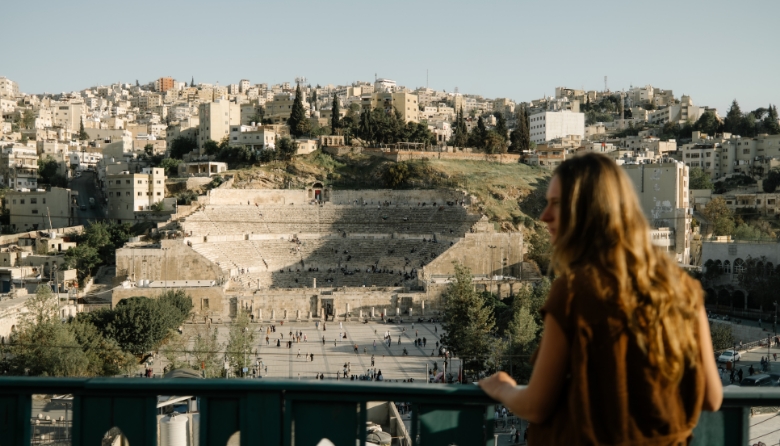
From the Citadel, descend into downtown to the Roman Theatre, a 6,000-seat amphitheatre carved into the hillside in the 2nd century AD and still used today for occasional performances. The Folklore Museum and the Museum of Popular Traditions are housed in the side wings of the theatre and are worth a look. Walk through the old souks to Hashem, the city's most famous hummus and falafel restaurant, in business since the 1950s.
Spend the afternoon at the Jordan Museum in Ras al-Ain, which houses Jordan's most significant archaeological collection in a purpose-built modern facility. In the evening, head to Rainbow Street in Jabal Amman for dinner, cafés, and the gallery scene. Overnight in Amman.
Day 2: Jerash
Drive north to Jerash, one of the best-preserved Roman provincial towns in the world. The drive takes about an hour from Amman. Originally called Gerasa, the city flourished under the Romans and the Umayyads before being abandoned after the 749 earthquake.
Enter through Hadrian's Arch, built in 130 AD to mark the emperor's visit, then continue past the Hippodrome and into the Oval Plaza, an unusual elliptical forum surrounded by Ionic columns. The Cardo Maximus, the colonnaded main street, runs nearly 800 metres through the heart of the ancient city, with the Temple of Artemis and the North and South Theatres on either side. Allow at least three to four hours.
Lunch in Jerash town, or drive to nearby Ajloun (45 minutes west) for the 12th-century Ajloun Castle, built in 1184 by 'Izz ad-Din Usama one of Saladin's commanders. The castle dominates a hilltop among oak and pine forests and offers a different north Jordan landscape from the lowland Roman ruins. Return to Amman by evening.
Day 3: Madaba and Mount Nebo
Drive south to Madaba, the City of Mosaics. The drive takes about 30 minutes from Amman. In the apse of the Greek Orthodox Church of Saint George lies the Madaba Mosaic Map, the oldest known cartographic depiction of the Holy Land, created in the 6th century AD. Walk around Madaba's old town to see the Archaeological Park, which preserves more Byzantine mosaic floors in their original locations, and the Church of the Apostles. Lunch in Madaba.
In the afternoon, continue ten minutes west to Mount Nebo, which rises 700 metres above the Jordan Valley. This is where the Prophet Moses overlooked the Holy Land before his death. On clear days, the view stretches across the Dead Sea to Jerusalem. The Memorial Church of Moses on the summit preserves extensive 6th-century mosaics that are among the best preserved in Jordan, and Pope John Paul II planted an olive tree near the entrance during his pilgrimage to Jordan in 2000. Return to Amman by evening.
Option 2: Adventure Lovers Itinerary
A southern itinerary covering Jordan's most physically demanding landscapes. Active travellers will canyon through one of the deepest gorges in the region, hike into Petra by the dramatic back route most visitors never see, and sleep in a Bedouin camp under the desert sky of Wadi Rum.
Day 1: Wadi Mujib Canyoning
Drive from Amman down to the Wadi Mujib Biosphere Reserve, the only nature reserve in the world located entirely below sea level. The reserve drops over a kilometre from the Jordanian plateau into the lowest land elevation on Earth, and its canyons are among the most dramatic in the region.
The Siq Trail is the headline experience: a two- to three-hour wet hike upstream through a narrow gorge with waterfalls, natural pools, rope-assisted climbs, and natural water slides. The trail operates during the summer months, weather permitting, and is run by the Royal Society for the Conservation of Nature. For longer guided routes (the multi-day Mujib Trail, the Ibex Trail, the Canyon Trail), book in advance through the RSCN.
After the canyon, recover at one of the Dead Sea resorts on the northeastern shore. The salt water (about 34 percent salinity, roughly ten times the salinity of the ocean) is unusually buoyant, and floating after a strenuous canyoning morning is the perfect counterpoint. Overnight at a Dead Sea resort.
Day 2: Petra Back Trail and Wadi Rum
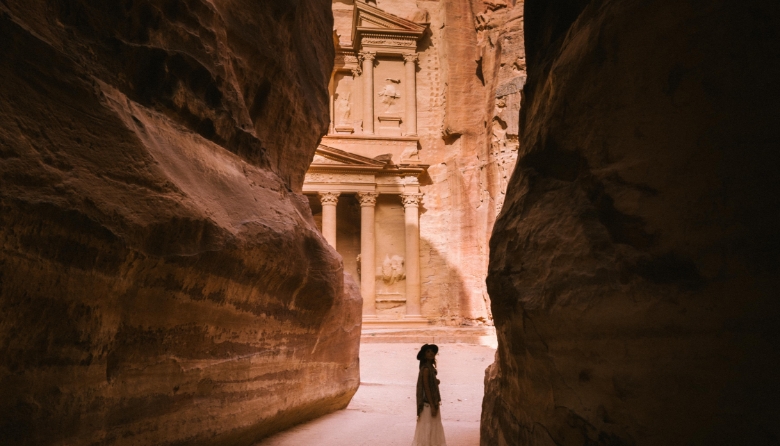
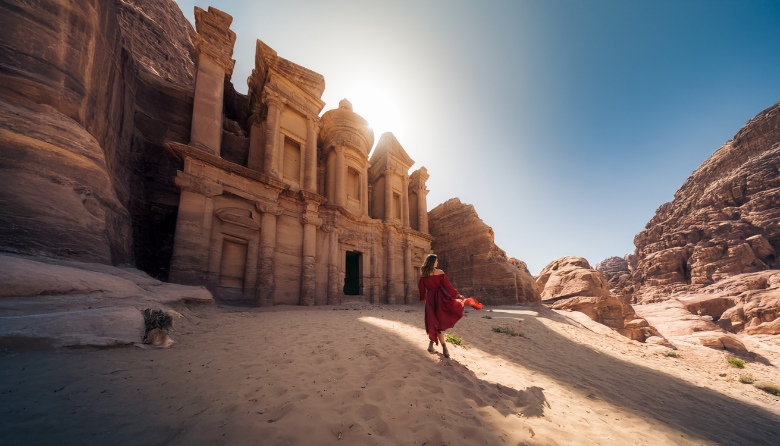
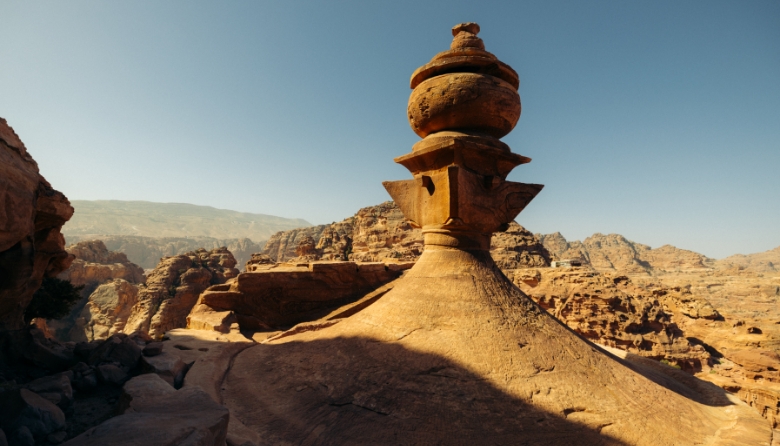
Drive north of Petra to Little Petra (Siq al-Barid), the smaller Nabataean settlement that served as a caravan rest stop on the trade route between southern Arabia and Gaza. From here, the official Back Trail to the Monastery (al-Dayr Back Way) is a 7-kilometre guided hike that passes the Neolithic village of al-Bayda, the Bronze Age settlement of Umm Saysaban, and agricultural valleys with Juniper and Oak trees, before the final stair ascent delivers views of Wadi Araba and ends at the 48-metre Monastery façade. Allow 5 to 6 hours for the hike, longer if you continue down through the lower city to the main Petra basin.
By late afternoon, transfer to Wadi Rum, ninety minutes south. The first activity in the desert is a sunset jeep drive to a viewpoint over the major rock formations, followed by a night desert walk or a Bedouin cultural experience around the fire. Overnight in a Bedouin camp.
Day 3: Wadi Rum Adventure Day and Return
Wadi Rum offers a wider range of adventure activities than any other single destination in Jordan. Pick one based on your interests:
A sunrise hot-air balloon flight gives you the entire desert from above, with the rock formations turning red as the sun comes up. Camel trekking through the dunes follows the routes Bedouin guides have used for centuries. Sandboarding and dune driving offer faster-paced desert activity.
After lunch, return to Amman approximately four hours via the Desert Highway, or fly from King Hussein International Airport in Aqaba (forty-five minutes from Wadi Rum) on one of the regular evening flights to Queen Alia International in Amman.
Option 3: Faith-Based Itinerary
A central and northern Jordan itinerary focused on the Christian heritage that has drawn pilgrims to Jordan for two thousand years. Three days from Amman covers all five Christian pilgrimage sites designated by Pope John Paul II during his 2000 visit to Jordan, when the Vatican officially recognized Mount Nebo, the Baptism Site (Bethany Beyond the Jordan), Mukawir, the Church of Our Lady of the Mountain in Anjara, and Tell Mar Elias as the country's official Catholic pilgrimage sites.
Day 1: Madaba, Mount Nebo, and the Baptism Site
Drive south from Amman to Madaba, the City of Mosaics. In the apse of the Greek Orthodox Church of Saint George lies the Madaba Mosaic Map, the oldest known cartographic depiction of the Holy Land, created in the 6th century AD. Continue to the Church of the Apostles and the Archaeological Park to see more Byzantine mosaic floors preserved in their original locations.
Drive ten minutes west to Mount Nebo, the first of the five Vatican-designated pilgrimage sites. This is where the Prophet Moses overlooked the Holy Land before his death. On clear days, the view stretches across the Dead Sea to Jerusalem. The Memorial Church of Moses on the summit preserves extensive 6th-century mosaics, and Pope John Paul II planted an olive tree near the entrance during his pilgrimage to Jordan in 2000.
In the afternoon, continue to Bethany Beyond the Jordan, the archaeological site of Al-Maghtas on the east bank of the Jordan River. This is the place where John the Baptist baptised Jesus, authenticated by all major Christian Church leaders as one of the three holiest sites of Christianity, alongside Bethlehem and Jerusalem. Visits are guided through the archaeological zone, past Byzantine churches and pilgrim dwellings, to the river bank itself. Three Popes (John Paul II, Benedict XVI, and Francis) have visited the site, and the Catholic Church has designated it as a place of indulgence. Many pilgrims bring small bottles to collect water from the river. Return to Amman.
Day 2: Mukawir and Umm ar-Rasas
Drive south to Mukawir (the ancient Machaerus), the fortified hilltop palace built by Herod the Great and later expanded by Herod Antipas. This is where John the Baptist was imprisoned and beheaded, the event described in the Gospels of Mark and Matthew. The ruins crown a stark conical hill with sweeping views across the Dead Sea valley, and a short climb from the parking area reaches the top.
Continue to Umm ar-Rasas (Kastron Mefaa), a UNESCO World Heritage Site preserving extensive Roman, Byzantine, and early Islamic ruins. The 8th-century mosaic floor in the Church of Saint Stephen depicts cities of the Holy Land and is considered one of the finest large-scale mosaics in the region.
Return to Amman by evening. An optional stop on the way back is Ma'in Hot Springs, where Herod the Great is said to have travelled to treat his ailments; the thermal waterfalls have been used for therapeutic bathing since Roman times.
Day 3: Anjara and Tell Mar Elias
Drive north from Amman to the two remaining Vatican-designated pilgrimage sites, both in Ajloun governorate. Anjara is the site where Jesus, Mary, and the disciples are said to have rested in a cave during their travels between Galilee, the Decapolis cities, and Jerusalem. The Church of Our Lady of the Mountain (Sayyidat Al-Jabal) marks the site today, and a major national Catholic pilgrimage gathers at the shrine on the third Friday of June each year.
Continue to Tell Mar Elias, in the village of Listib about 15 kilometres northwest of Ajloun. This is the traditional birthplace of the Prophet Elijah, "Elijah the Tishbite, of the inhabitants of Gilead." Two Byzantine churches stand on the hilltop, the larger of which is among the biggest Byzantine religious monuments in Jordan, with mosaic floors featuring floral patterns, geometric designs, and Greek inscriptions. A large oak tree at the upper church is decorated with ribbons by visitors of all faiths who come to pray for wellbeing.
Return to Amman by evening. The drive passes Ajloun Castle (Qal'at Ar-Rabad), built in 1184 to defend the medieval pilgrimage and trade routes through the region.
If You Have More Time
All three itineraries are designed as 3-day options, but four or five days lets you combine them. With four days, add the Dead Sea to the Cultural itinerary, or add Madaba and Mount Nebo to the Adventure itinerary. With five to seven days, you can also add the Dana Biosphere Reserve, snorkelling in Aqaba, and the Crusader castles of Karak and Shobak. See our full guide to things to do in Jordan for the complete picture.
Frequently Asked Questions
Which option should I choose? Choose the Cultural itinerary if you prefer a slower pace with a single hotel base, are interested in Roman archaeology and Byzantine mosaics, or are returning to Jordan after a previous visit to Petra. Choose the Adventure Lovers itinerary if you want hands-on landscapes, can handle moderate fitness demands, and prioritize active experiences over museum visits. Choose the Faith-Based itinerary if you are a Christian pilgrim or want to follow the biblical and early Christian heritage that gives Jordan its place in the Holy Land.
Is 3 days enough for Jordan? Jordan deserves more than three days, but each itinerary above delivers a meaningful experience focused on what matters to a different kind of traveller.
What should I pack? Comfortable walking shoes are essential. Sun protection (hat, sunglasses, high-SPF sunscreen) is needed year-round. For the Adventure itinerary, bring quick-drying clothing and sturdy water shoes for Wadi Mujib. For the Cultural and Faith itineraries, modest clothing covering shoulders and knees is appropriate when visiting churches, mosaic sites, and the Baptism Site.
Ready to Plan Your Trip
Whether you choose the cultural heritage of Amman, Jerash, Madaba, and Mount Nebo, the active landscapes of the south, or the layered Christian heritage of the pilgrim route, three days in Jordan from Amman delivers a real experience of one of the most rewarding destinations in the Middle East. All three itineraries can be booked through any of Jordan's licensed tour operators, or arranged independently with a hired driver. For longer stays or deeper exploration, build out from these foundations with our full guide to things to do in Jordan.