Is It Safe to Visit Petra, Jordan?
If you're planning a trip to Petra, you've probably asked yourself: is it safe to visit Petra Jordan? Petra welcomes hundreds of thousands of visitors each year, has a dedicated Tourism Police presence, registered guides, well-marked main trails, and sits within one of the most stable countries in the region. This guide walks through what makes Petra a welcoming destination, along with practical guidance to help you get the most out of your time there.
The Short Answer
Yes. Petra is a UNESCO World Heritage Site and one of Jordan's most carefully managed tourist destinations. The Petra Archaeological Park has its own dedicated Tourism Police, registered guides, controlled entry through the Visitor Centre, and well-marked main trails.
As with any trip, a little preparation and a sensible approach will ensure you have a pleasant time.
General Safety Conditions in Petra
Inside the Petra Archaeological Park, the day-to-day safety environment is calm and well-managed. The Tourism Police are uniformed and patrol the main trails, the Visitor Centre, and the entrance gates. They're easy to spot, speak English, and are there specifically to help visitors.
Known for their generosity and welcoming nature, Jordanians, especially local vendors, may occasionally be gently persistent when offering souvenirs, postcards, or donkey and camel rides. A polite "no, thank you" is usually all it takes to navigate these interactions respectfully.
Wadi Musa, the gateway town where you'll likely stay overnight, is small, walkable, and used to international visitors. Hotels, restaurants, and shops are concentrated in a compact area, and the Bedouin community that lives in and around Petra is generally welcoming and hospitable.
Precautions for Visitors
The main things to think about for your Petra visit are weather and terrain, both easy to plan for.
Summer heat (June to August). Temperatures in Wadi Musa can climb above 35°C, and the trails inside Petra offer little shade once you're past the Siq. Carry plenty of water, wear a hat, use sun protection, and consider starting at opening time so you cover the longest distances before midday.
Winter rain (November to March). During the rainy months, occasional heavy rain can cause flooding in the Siq and surrounding wadis. The Petra authorities monitor conditions closely and close the site when needed for visitor safety. Closures are uncommon, and checking the forecast on the morning of your visit is a simple way to plan around any short-notice change.
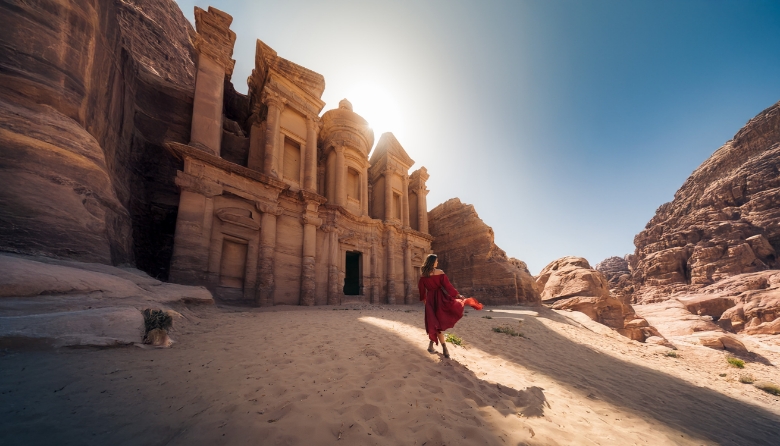
Slippery rocks and steep climbs. The trails to the Monastery, the High Place of Sacrifice, and Al-Khubtha viewpoint involve hundreds of carved steps. The stones can be slippery when wet or worn smooth. Wear sturdy closed-toe shoes with good grip. Trainers or hiking shoes are ideal.
Dehydration. Drink water steadily throughout the day, even in winter.
Safety Tips for Solo Travellers and Families
Petra welcomes solo travellers, families with children, and older visitors with mobility considerations. Each group has its own things to think about.
Solo female travellers. For the most enjoyable visit, stick to the marked trails, use registered guides arranged through the Visitor Centre or your hotel, and feel free to politely decline invitations to private or remote areas if they don't feel right. Trust your instincts. Most interactions with the Bedouin community at Petra are warm, genuine, and a highlight of the visit.
Families with children. Petra is family-friendly, but the distances are real. From the entrance to the Treasury is around 2 km one way, and a full visit involves several more kilometres of walking. Plan for younger children with carriers or scheduled rest stops, and watch your kids around unfenced edges at high viewpoints.
Older travellers and those with mobility considerations. Horse carts operate from the Visitor Centre to near the Treasury, and golf cart shuttles are available for longer distances. The Monastery and Al-Khubtha climbs involve hundreds of steps and aren't accessible to everyone, but the main trail to the Treasury and the Royal Tombs is largely manageable.
Local Regulations and On-Site Guidelines
Petra has clear rules designed to protect both visitors and the site itself. Following them keeps everyone safe and avoids legal issues.
Strict opening and closing hours. The Petra Archaeological Park has set entry and exit times, which vary slightly by season. Staying inside the park outside these hours is not allowed. Always exit before closing, and do not accept any invitation that involves staying inside the park overnight.
Stay on marked trails. Off-trail exploration is restricted in many parts of the site to protect the archaeology and to keep visitors safe. Some unmarked side trails are physically risky, especially in the high places.
Use registered guides. Official guides are available through the Visitor Centre and are a worthwhile investment for context and safety. They wear identification and can be verified at the entrance.
Don't climb on the monuments. This is both a safety rule and a heritage protection rule. The carved facades are fragile and the heights are real.
Bottled water only. Tap water in Wadi Musa is safe for showering and brushing teeth, but stick to sealed bottled water for drinking.
What to Avoid When Visiting Petra
- Park hours: For your safety, depart from the park before sunset.
- Overnight stays: Spend your nights in nearby Wadi Musa, where many hotels and accommodations are available to suit every budget. Overnight stays inside the archaeological site itself are not permitted.
- Cultural sensitivity: Embrace and respect the local communities, their customs, culture, and faith.
- Trail safety: Stick to the main trails unless accompanied by a guide. For your safety and to fully appreciate the guided trails, a local guide is required.
- Private invitations: Politely decline invitations to private caves, hikes, or gatherings from people you don't know.
- Drinking water: Stick to sealed bottled water throughout your visit.
- Heritage protection: Admire the carved monuments without climbing on them.
- Antiquities: Refrain from buying items presented as antiquities, including rocks or coins. Authenticity cannot be verified, and such purchases can contribute to harmful practices.
- Weather awareness: Check the forecast on the morning of your visit, and follow any short-notice closures.
- High trails: When tackling the longer climbs, share your route and expected return time with someone at your hotel.
Once you're ready to plan your trip, explore everything Petra has to offer including trails, activities, and experiences.
Petra Tourism Police and Emergency Contacts
If you need help inside the park, the Tourism Police are present and visible at the Visitor Centre and along the main trails. Outside the park, your hotel reception is the fastest first point of contact for any concern, from a lost item to a medical question.
Useful numbers to save before your visit:
- Tourist Police Hotline: +962 79 550 5755
- Petra Development & Tourism Region Authority (PDTRA) Hotline: +962 798 100 500
- General emergency: 911
Read also how to get to Petra safely
FAQs
Is Petra safe for tourists?
Yes. Petra has its own dedicated Tourism Police, well-marked main trails, and a managed entry system through the Visitor Centre. Serious crime against tourists is rare, and the most common things to plan around are heat, hydration, and flash flood risk in winter rather than safety issues with people.
Are there any travel restrictions in Petra?
Inside the Petra Archaeological Park, the main rules are the strict opening and closing hours, restrictions on off-trail exploration in protected zones, and a ban on climbing on the carved monuments. The site closes for safety during heavy rain when flash flood risk is high. Always check with your hotel or the Visitor Centre on the day of your visit for any temporary closures.
Is it safe to walk around Petra alone?
Yes, on the main marked trails. The route from the Visitor Centre through the Siq to the Treasury and along the Street of Façades is busy with other visitors throughout the day and well-patrolled by Tourism Police. For longer hikes such as the Monastery, the High Place of Sacrifice, or Al-Khubtha, going with a registered guide or another traveller is recommended, especially if you're a solo female visitor.
What should I avoid when visiting Petra?
The short list: don't accept invitations to private caves or evening gatherings from strangers, don't stay inside the park past closing time, don't drink unsealed water, don't climb on monuments, and don't enter the Siq when rain is forecast. Most travellers who run into problems can trace it back to one of these.
Is Petra safe for female travellers?
Yes, including solo travellers. A few practical habits help solo female visitors enjoy Petra at its best: stick to the marked trails, use registered guides arranged through the Visitor Centre or your hotel, and politely decline private invitations to remote areas or evening gatherings from people you've just met. Most interactions with the local community at Petra are warm and welcoming, and many solo female travellers describe their visit as a personal highlight of their trip.